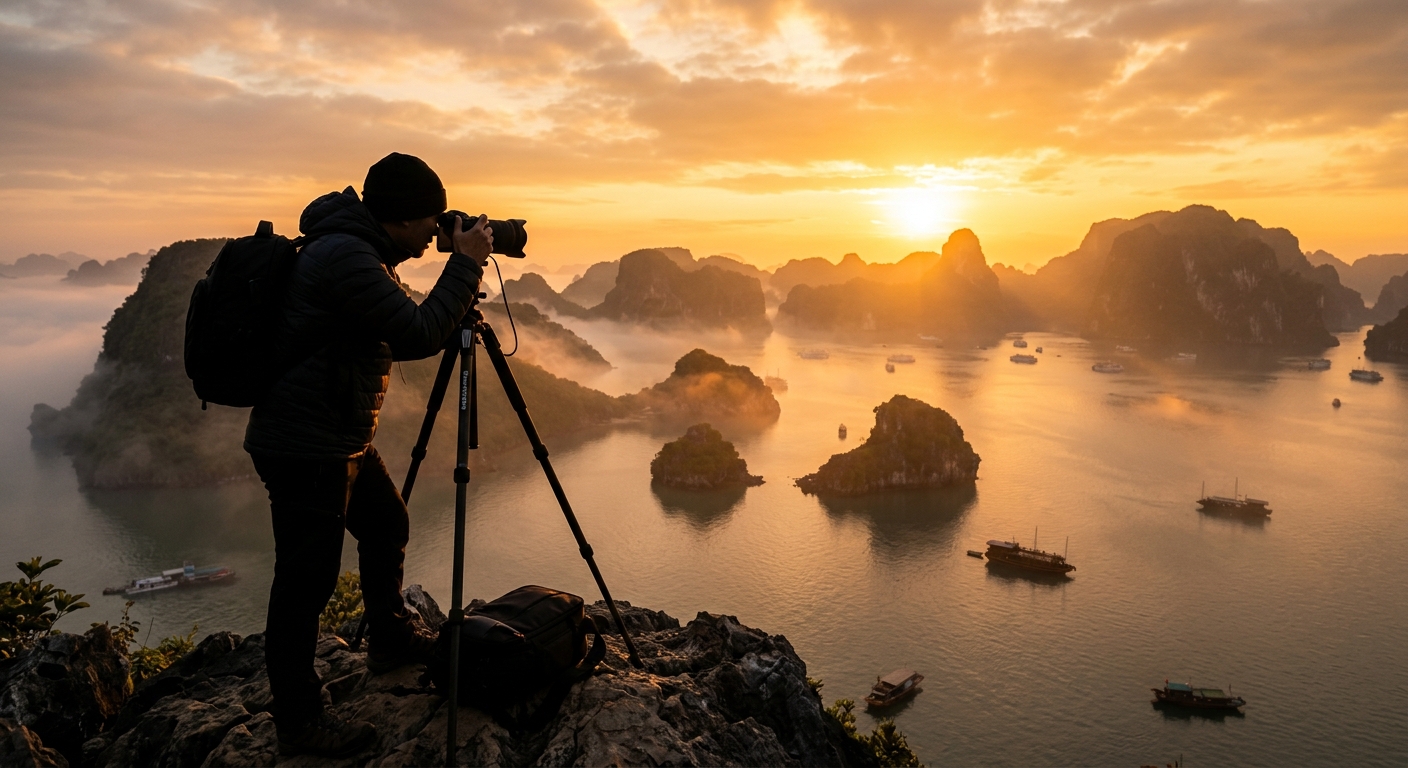
Vietnam is one of the most photogenic countries in Southeast Asia. From misty mountains to lantern-lit streets, every corner offers something worth capturing. Here’s how to get great shots.
Best Photography Locations
Northern Vietnam
- Halong Bay: Limestone karsts, traditional boats, dramatic sunrises
- Sapa rice terraces: Best during planting (May-June) or harvest (September-October)
- Hanoi Old Quarter: Street life, vendors, architecture
- Ninh Binh: Karst landscapes, temples, rice paddies
Central Vietnam
- Hoi An: Lanterns, ancient architecture, especially at night and full moon
- Hue: Imperial citadel, royal tombs, Perfume River
- Hai Van Pass: Sweeping coastal views
Southern Vietnam
- Mekong Delta: Floating markets, river life, palm landscapes
- Ho Chi Minh City: Urban energy, markets, street food
- Cu Chi Tunnels: Historical documentation
Golden Hour is Everything
Vietnam’s best light is early morning and late afternoon:
- Sunrise: 5:30-6:30 AM (varies by season)
- Sunset: 5:30-6:30 PM
The harsh midday sun flattens everything and creates unflattering shadows. Use that time to rest, eat, and scout locations.
Photographing People
The Respectful Approach
- Ask permission: A smile and gesture with your camera works
- Show them the photo: People love seeing the result
- Engage first, photograph second: Buy something, have a conversation
- Accept “no”: Some people don’t want to be photographed. Respect that.
Candid vs. Portrait
Candid shots capture authentic moments but can feel intrusive. Portraits create connection but can feel staged. Mix both for a complete story.
Don’t Photograph
- Military installations
- People without permission
- During religious ceremonies (without asking)
- Children without parental permission
Street Photography Tips
- Walk slowly: Rushing means missing moments
- Look for patterns: Rows of lanterns, repeated shapes
- Capture scale: Person against massive karst, tiny stool against chaotic street
- Wait for it: Set up your frame, wait for the right element to enter
Gear Recommendations
Essentials
- Camera: Whatever you have. Phones now take incredible photos.
- Wide-angle lens: For landscapes and cramped streets
- Fast lens (f/1.8 or similar): For low light and portraits
Useful Accessories
- Polarizing filter: Cuts haze and reflections
- Extra batteries: Especially in cold Sapa
- Microfiber cloth: Humidity fogs lenses constantly
- Weatherproof bag: Sudden rain is common
What to Leave Home
- Tripod (unless serious landscape photographer)
- Multiple camera bodies
- Expensive gear that makes you a target
Dealing with Challenges
Humidity
Coming from air-conditioned spaces, your lens will fog. Let equipment acclimate before shooting.
Rain
Brings its own opportunities. Reflections, moody atmosphere, interesting behavior. Protect your gear but don’t hide inside.
Crowds
Major sites are packed. Go early, stay late, or find unusual angles.
Editing Tips
- Vietnam’s colors are already saturated – don’t overdo it
- Hoi An lanterns need exposure adjustment (they blow out easily)
- Dehaze tool is your friend for misty mornings
- Back up your photos daily – don’t lose everything
Leave a Reply