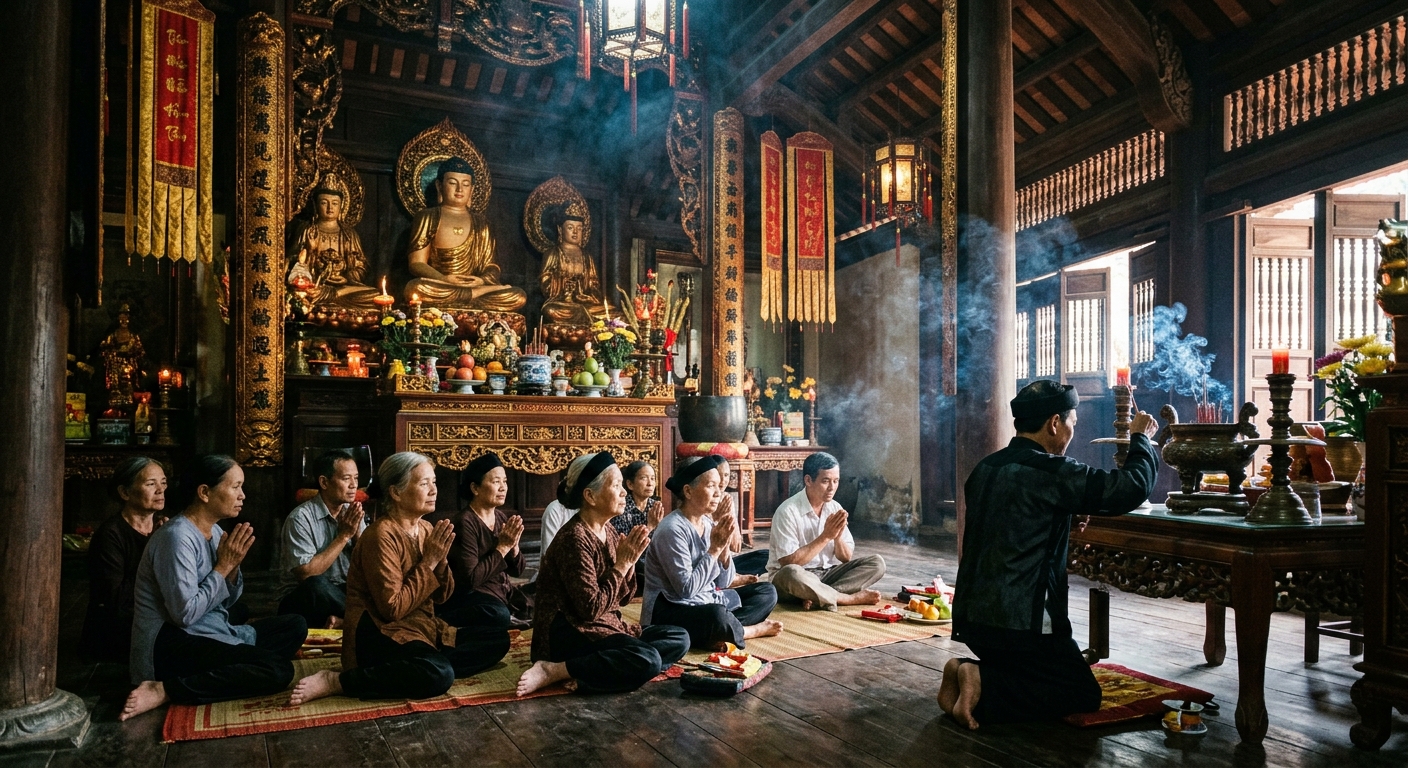
Vietnam’s temples and pagodas are living places of worship, not museums. Visiting respectfully enriches your experience and honors the people who consider these sites sacred.
Understanding Vietnamese Religious Sites
Pagodas (Chùa)
Buddhist temples. The most common sacred sites you’ll encounter. Home to monks, places of daily worship.
Temples (Đền/Điện)
Honor local spirits, national heroes, or Taoist deities. Often dedicated to specific historical figures.
Communal Houses (Đình)
Village community centers honoring guardian spirits. Less formal but still sacred.
Dress Code
Required
- Shoulders covered: No tank tops or spaghetti straps
- Knees covered: No shorts above the knee, no short skirts
- Modest clothing: Nothing tight or revealing
Provided Cover-Ups
Major sites often provide sarongs or robes for visitors dressed inappropriately. Don’t rely on this – come prepared.
Footwear
- Remove shoes before entering main halls
- Follow signs or observe what others do
- Wear slip-on shoes for convenience
Behavior Guidelines
General Conduct
- Speak quietly: This is a place of prayer
- Turn off phones: Or set to silent
- Move slowly: Don’t rush through
- Don’t point feet at Buddha statues: Considered disrespectful
- Don’t touch statues or altars: Unless specifically invited
Sitting and Standing
- Sit lower than Buddha statues when possible
- Don’t sit with your back to the altar
- If sitting on floor, tuck feet beside or beneath you
During Services
- You can observe quietly from the side
- Don’t walk through the middle of worshippers
- Don’t take photos during prayers
Photography
General Rules
- Look for “No Photo” signs
- Main altar rooms often prohibit photography
- Gardens and exteriors usually fine
- Never photograph people praying without permission
- No flash photography inside
When Uncertain
Ask a monk or temple guardian. A questioning gesture with your camera usually gets a clear yes or no.
Offerings and Donations
Donation Boxes
Usually at the entrance or near main altars. Any amount is appropriate. This helps maintain the site.
Incense
- Often available for a small donation
- Light from existing flames, not matches
- Bow three times when placing incense
- Hold with both hands at forehead level
Other Offerings
Fruit, flowers, and paper offerings are left by worshippers. Don’t touch or move these.
Interacting with Monks
- Women should not touch monks or hand them things directly
- If invited to talk, sit lower than them
- Photos usually okay with permission
- English-speaking monks enjoy practicing with visitors
Special Considerations
Ho Chi Minh Mausoleum
More restrictive than temples: no shorts, tank tops, or revealing clothing. No cameras inside. No talking. Lines can be long.
Active Ceremonies
If you arrive during a ceremony, wait quietly outside until it concludes, or watch from a respectful distance.
Leave a Reply