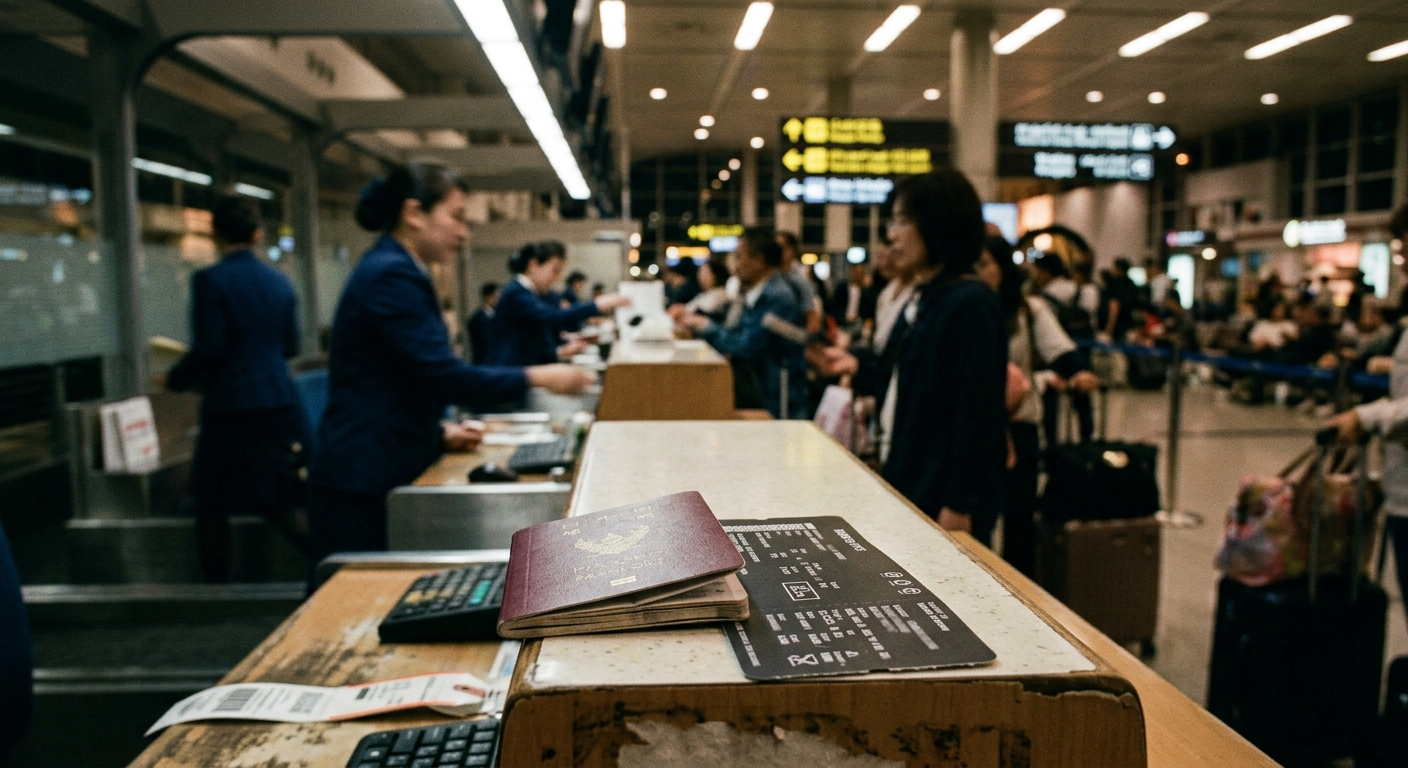
The check-in counter at Changi Airport was unnervingly quiet, a stark contrast to the thrum of anticipation I felt just twenty minutes prior. The airline agent tapped her keyboard, her eyes flickering across the screen with that specific, rhythmic hesitation that every traveler learns to dread. She paused, looked up, and delivered the sentence that ruins vacations: “Sir, your visa status is showing as ‘pending’ in the system, and I cannot issue your boarding pass without the official approval letter.”
I felt a cold prickle of sweat at the base of my neck. I had applied for the e-visa nearly a week ago, assuming the standard processing time would cover me. It hadn’t. With my flight to Ho Chi Minh City departing in less than three hours, I was staring down the barrel of a denied boarding vietnam visa scenario that I had never considered a genuine possibility until that exact moment.
The Airport Bench Logistics of a Last-Minute Save
Step one of an airport emergency is to move away from the counter. Staying there only blocks the queue and induces panic. I retreated to a bench near Gate B7, laptop open, heart hammering against my ribs. The reality of the situation is that airline staff are bound by strict carrier liability regulations; they cannot “check” or “influence” your visa status, nor can they bypass the digital gatekeepers. They need to see a PDF document that validates your legal entry. If it isn’t in your inbox, you aren’t getting on that plane.
My fingers flew across the keyboard as I initiated an urgent vietnam visa request. In these moments, accuracy is more important than speed. A single typo in your passport number will render the expedited service useless, forcing you to start the clock over when you can least afford to. I pulled up my passport scan, cross-referencing every digit against the digital form. Within fifteen minutes, I had submitted the application through a service specifically designed for rapid turnaround. The anxiety here is physical—it’s the weight of the ticking clock—but the process itself is remarkably mechanical. You are paying for a human on the other side to prioritize your file, pushing it through the bureaucratic channels that standard applications simply don’t have access to.
While I waited for the email notification, I took stock of what actually matters. An approval letter is not a stamp in your passport; it is a legal authorization that tells the immigration officer at Tan Son Nhat that your identity has been vetted. Airlines recognize these letters because they carry the necessary government seals and reference numbers required to clear you for travel. Without it, the airline is on the hook for a hefty fine if they fly an ineligible passenger into the country, which is precisely why they are so rigid at the gate.
I spent the next forty-five minutes tracking the status. This is where most travelers make the mistake of refreshing their inbox every ten seconds. Instead, I refreshed my account portal. The status shifted from “Processing” to “Document Available” with a notification ping that felt louder than a starting gun. I downloaded the PDF, saved it to my phone, and printed it at the airport business center—just in case a digital copy wasn’t sufficient for the final desk check.
Returning to the counter, I held the document with the casual confidence of someone who hadn’t just spent an hour white-knuckling a laptop on a plastic seat. The agent scanned the approval letter, her screen finally turning from red to green. The boarding pass printer whirred to life. It is easy to assume that these systems are immovable objects, but the truth is that they are highly responsive to the right documentation.

Many travelers find themselves in this position because they rely on the assumption that immigration offices work on a consistent, predictable schedule. They don’t. Unexpected holidays, system maintenance, or simple administrative backlogs can turn a routine trip into a logistical nightmare. If you find yourself staring at a check-in screen that won’t budge, the priority is to stop focusing on the airline agent’s limitations and start focusing on the authorization document that grants you permission to land.
Securing an urgent vietnam visa is not about gaming the system; it is about providing the immigration authorities with the necessary information to verify your status under an accelerated timeline. By the time I sat down in 14C, the earlier panic had dissolved into a quiet exhaustion. The view from the window seat as we taxied toward the runway was the same as it would have been had I received my visa on time, but the perspective was entirely different. I learned that while the digital age has made travel more accessible, it has also created a fragile reliance on instant verification. When that verification fails, the bridge between you and your destination is only as strong as your ability to pivot and secure the right paperwork before the cabin doors close for good.