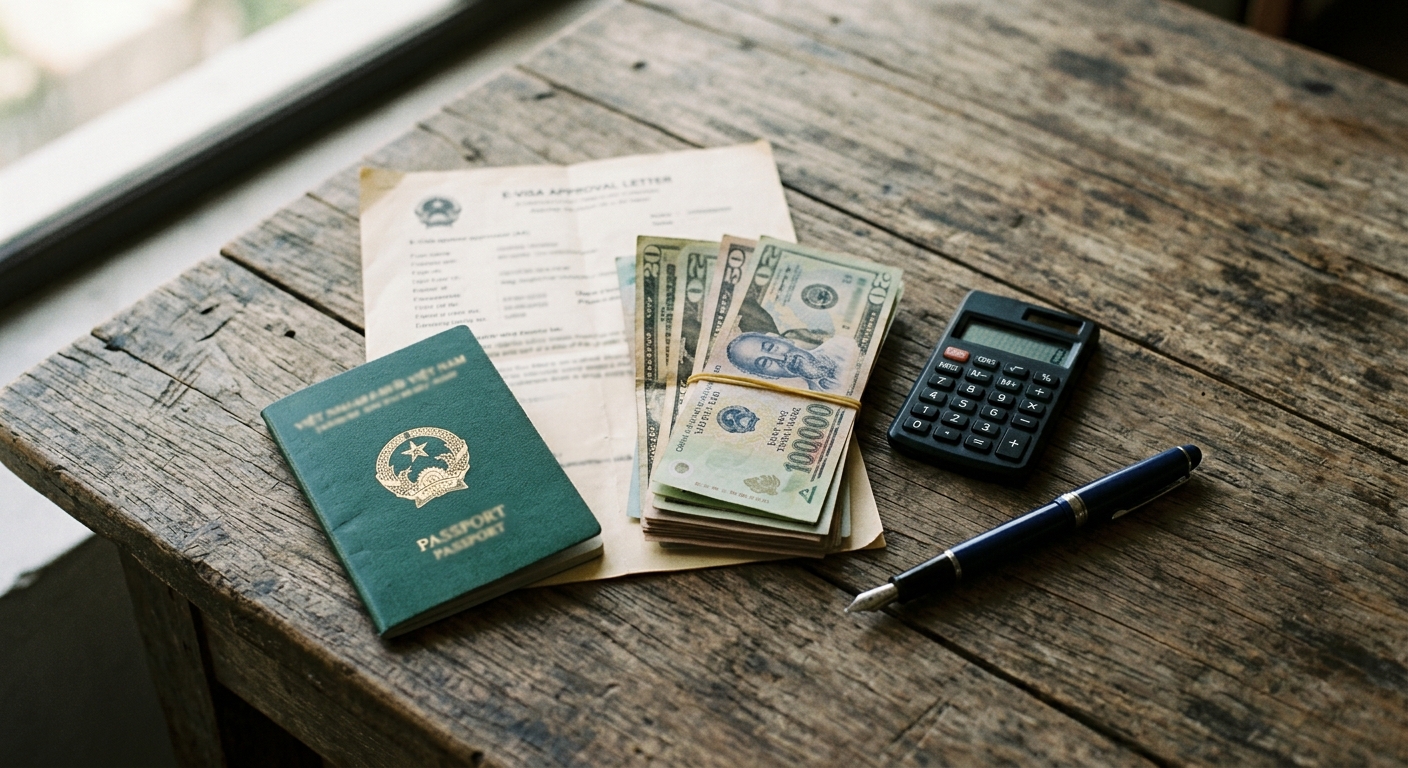
The math behind a trip to Vietnam often starts with the flight price, but for many travelers, the true headache begins the moment they start calculating their immigration documentation. By 2026, the cost structure for entry has stabilized into a predictable rhythm, yet the sheer variety of service tiers means that two people sitting next to each other on the same plane could have paid drastically different prices for the exact same entry permission. The base government Vietnam e-visa fee is officially set at $25, but finding a traveller who only paid that amount is becoming increasingly rare as the necessity for accuracy and speed takes precedence over absolute rock-bottom pricing.
Most travelers opt for a third-party agent to handle their application, and this is where the standard market rate begins to shift. A legitimate service provider typically adds a processing fee ranging from $25 to $50 on top of the government charges. This covers the human element: the professional who reviews your passport scans for potential shadows, ensures your photo meets the stringent local requirements, and monitors the portal for any bureaucratic hiccups. When you factor this in, the total cost for a standard 30-day, single-entry e-visa usually lands between $50 and $75. If you are opting for a 90-day multi-entry authorization, the government fee rises accordingly, and agency service fees often scale up to account for the increased administrative burden of tracking longer stay durations.
The True Price of Expedited Entry
Things become significantly more expensive when your travel dates are looming or you have encountered a processing delay. When standard processing is not an option, you are effectively paying for the privilege of jumping the queue or forcing a manual review of your documents outside of standard business hours. An urgent Vietnam visa price can range anywhere from $60 to $180, depending on the intensity of the turnaround—whether that is a 24-hour e-visa turnaround or a desperate, last-minute airport fix. This premium covers the cost of having an agent on the ground who can liaise directly with authorities or leverage priority submission channels that are not available to the public. It is a service premium, not a government tax, and it should be viewed as an insurance policy against missing a flight or being turned away at the gate.
Travelers often forget that there are “hidden” costs that emerge during the process, which can push your total spend higher than expected. One of the most common pitfalls is the passport photo requirement. Vietnam’s digital upload system is notoriously picky about lighting, background color, and the absence of glasses. Many applicants end up paying a second time to have a professional retake their photos after an initial rejection email from the immigration department. Additionally, if you rely on a high-end service that requires physical documents or an original letter to be couriered to your home, the postage fees can add another $20 to $40 depending on your location. Furthermore, if you are paying for these services with a card issued in a currency other than US Dollars, your bank’s currency-conversion margin can quietly shave an extra 3% to 5% off your balance without you ever seeing it as a line item on the agency’s invoice.
If you are utilizing a visa-on-arrival method—which is still relevant for certain types of pre-approved business authorizations—you must prepare for the stamping fee. This is a separate cost from your application service fee and must be paid in cash at the airport arrival window. While the standard is $25 for a single entry and $50 for multiple entries, customs officials generally only accept crisp, unmarked USD bills. If you hand over a torn, stained, or older-series banknote, you may be sent to an airport exchange kiosk where the rates are predatory. Always bring the exact amount in pristine condition to avoid unnecessary delays at the immigration desk.
Understanding where these costs originate is the best way to ensure you are not overpaying. Many travelers lose money simply by choosing the first website that appears in a search engine, which often happens to be an automated aggregator that charges maximum premiums for minimum support. In 2026, the landscape is defined by this split between automated low-cost platforms and boutique agencies that prioritize speed. The most common way travelers quietly overpay is by failing to account for the currency conversion rates or by purchasing “urgent” services when they actually had plenty of time to utilize the standard, cheaper processing track. By being intentional about your turnaround needs and verifying the total out-of-pocket math before hitting submit, you can keep your travel budget intact while ensuring your documents are ready for inspection upon arrival.