The E-Visa is the standard choice for most travelers, offering a fixed price and pre-approved entry. Visa on Arrival remains a niche option for those with an official pre-approved letter who require specific entry support. Choose the E-Visa for predictability and the Visa on Arrival for complex, urgent, or multi-entry needs.
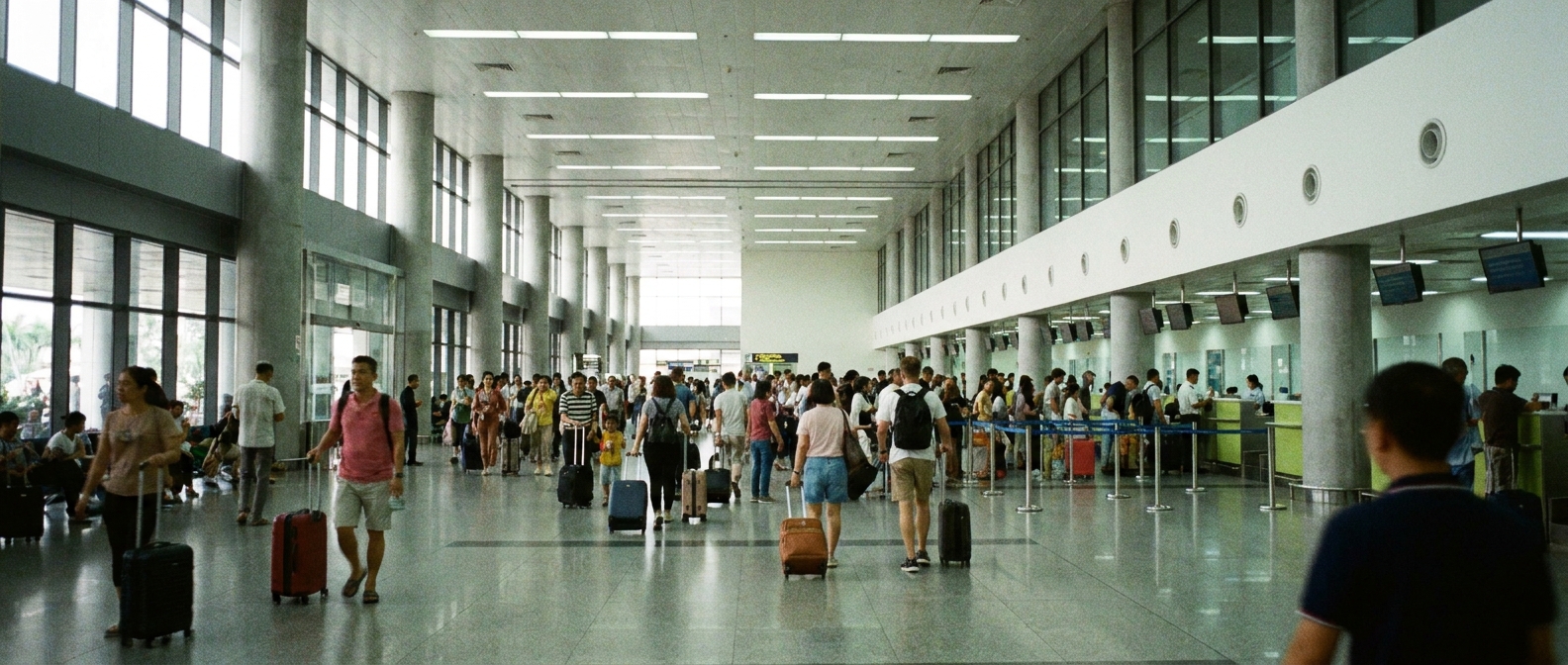
Apply Online (E-Visa) vs Apply at the Airport (Visa on Arrival) — quick comparison
| Dimension | Apply Online (E-Visa) | Apply at the Airport (Visa on Arrival) |
|---|---|---|
| Where you apply | Applications are submitted entirely through the official Vietnam Immigration Department portal. | You must first secure a pre-approval letter from a third-party agency before arriving at the airport. |
| Fastest realistic turnaround | Standard processing takes 3 to 5 working days, though urgent services may expedite this to 24 hours. | Agencies can provide emergency approval letters in as little as 4 to 8 hours for an additional fee. |
| Total cost | The government fee is fixed at $25 for single-entry or $50 for multiple-entry, paid upfront. | Costs include the agency service fee plus a $25 stamping fee paid in cash at the airport. |
| Risk of denial at gate | Minimal, as the visa is granted before departure, preventing boarding issues. | Higher, as the final visa is issued at the discretion of the immigration officer upon arrival. |
| Pre-departure requirements | You must print the E-Visa document to present at the airline check-in counter. | You must carry a printed pre-approval letter and passport photos to exchange for the visa. |
| Best for last-minute travel | Not ideal, as processing times are rigid and delays can prevent boarding your flight. | Superior, as specialized agencies can process emergency letters significantly faster than government systems. |
| Trustworthy intermediaries | None required; the process is direct with the government. | Essential, as you must use a private agency to obtain the mandatory pre-approval letter. |
In 2026, the distinction between the E-Visa and Visa on Arrival (VOA) is defined by the level of control the traveler has over their documentation. The E-Visa is the government-mandated standard for the vast majority of tourists and business visitors. By applying directly through the official portal, you bypass third-party service fees and receive a digital document that is verified before you even reach the airport. This method is highly recommended because it eliminates the uncertainty of the arrival process, ensuring that your entry is authorized before you board your flight.
Visa on Arrival, conversely, is not a “visa” in the traditional sense, but rather a process of obtaining a pre-approval letter from a private agency. This letter allows you to board a flight to Vietnam, where you then queue at the Visa on Arrival counter to exchange your paperwork for the actual visa stamp. While this was once the primary method for most travelers, it is now largely reserved for those who have complex travel schedules or those who have missed the window for a standard E-Visa application. The VOA process requires you to carry cash—specifically USD—to pay the stamping fee at the airport, as credit cards are rarely accepted at these counters.

Cost structures differ significantly between these two methods. The E-Visa is transparent: you pay $25 for a single-entry visa or $50 for a multiple-entry visa. There are no hidden charges. With Visa on Arrival, you pay a service fee to the agency that secures your letter, which can range from $10 to $100 depending on the urgency of your request, plus the mandatory $25 government stamping fee paid upon arrival. If you are traveling on a budget, the E-Visa is consistently the more affordable option.
The risk profile is another critical factor. When you hold an E-Visa, your entry status is confirmed by the immigration department. Airlines are generally satisfied with this document, and you are unlikely to face issues at the check-in counter. With Visa on Arrival, you are presenting a letter issued by a private company. While these letters are generally accepted, they are subject to more scrutiny by airline staff. If an airline agent is unfamiliar with the VOA process, they may delay your check-in while they verify the legitimacy of your paperwork, which can lead to missed flights.
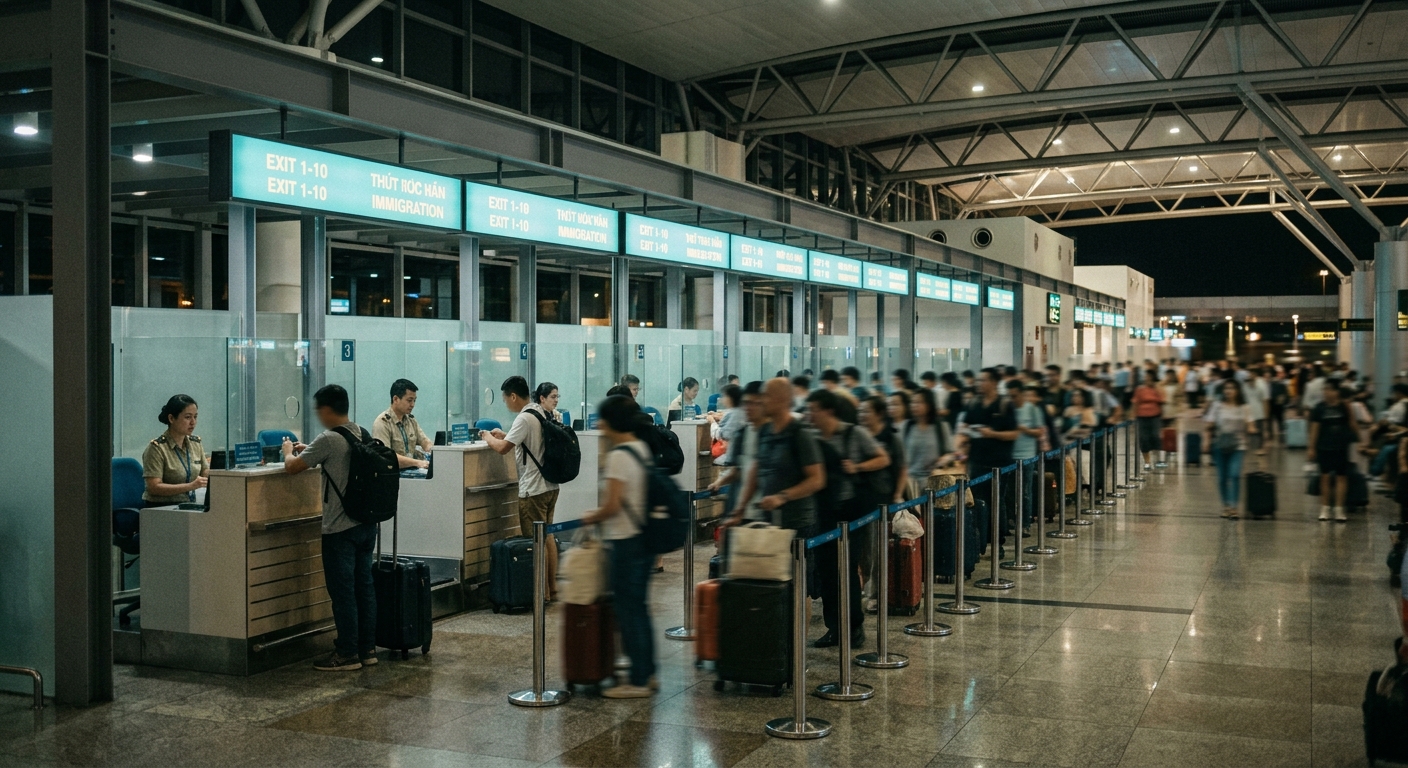
There are edge cases where VOA remains superior. If you are a last-minute traveler or if your E-Visa application was rejected due to a minor error, an agency specializing in VOA can often provide an emergency letter within a few hours. This is a vital safety net for those who need to reach Vietnam immediately. However, for those planning their trip at least a week in advance, the E-Visa is the more reliable and cost-effective choice. Always ensure your passport has at least six months of validity remaining, regardless of the method chosen, as this is a non-negotiable requirement for entry into Vietnam in 2026.
Frequently asked questions
Can I get a Vietnam visa at the airport on arrival in 2026?
Yes, you can obtain a visa at the airport, but only if you have secured a pre-approval letter from a registered agency before your flight. You must present this letter, along with your passport and photos, at the immigration desk to receive your official visa stamp upon arrival.
Is applying online for the Vietnam visa cheaper than at the airport?
Yes, applying online via the official E-Visa portal is cheaper. You pay only the government fee of $25 or $50. Visa on Arrival requires paying an additional service fee to a private agency, which increases the total cost compared to the direct government-issued E-Visa process.
What happens if my online e-visa is not approved before my flight?
If your E-Visa is not approved, you cannot board your flight to Vietnam. Airlines are required to verify your visa status before departure. You must either reschedule your flight to wait for the approval or, in urgent cases, contact an agency to arrange a Visa on Arrival letter.
Which airports in Vietnam still issue visa on arrival?
Visa on Arrival is available at major international airports including Noi Bai in Hanoi, Tan Son Nhat in Ho Chi Minh City, Da Nang International Airport, and Cam Ranh in Nha Trang. You must ensure your specific port of entry is listed on your pre-approval letter before arriving.
Can I get a 4-hour Vietnam visa if I apply online?
No, the official government E-Visa system does not offer a 4-hour turnaround. Standard processing takes 3 to 5 working days. If you require a visa within 4 hours, you must use a private agency to obtain an emergency pre-approval letter for the Visa on Arrival process.