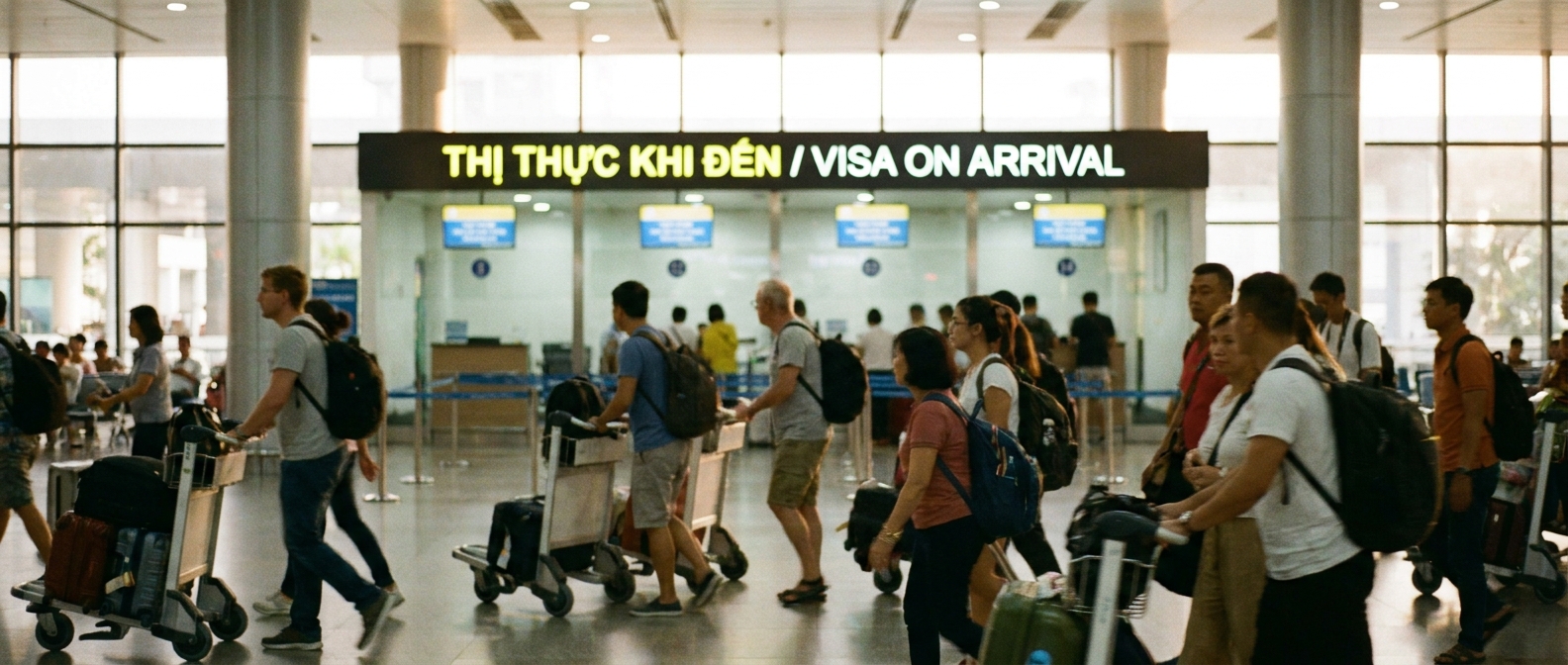
The departure board at Tan Son Nhat airport displays a quiet, blinking reality: travel plans rarely survive contact with reality. Standing at a check-in counter in Frankfurt or Los Angeles while a desk agent informs you that your electronic authorization hasn’t arrived is a singular, sinking feeling. Most travelers believe the bureaucracy is a cold, mechanical process governed solely by bots and algorithms. In truth, the expedited channel is a highly human operation, one where prioritizing accuracy isn’t just a suggestion—it is the only mechanism that forces a file to the top of the pile.
Ask online, we answer right awayType your question on this page. No app to install, no number to save.Ask onlineIf your flight is within days, our urgent Vietnam visa service covers the 1-hour to 48-hour tiers.
When you opt for an urgent Vietnam visa, you aren’t paying for magic. You are paying for a dedicated manual review process where experienced agents identify and rectify discrepancies that would otherwise trigger an automatic rejection or a standard three-day wait. The expedited tier functions by bypassing the automated queues in favor of direct communication channels with immigration departments, ensuring that human eyes verify the documentation against the specific requirements of the current day’s processing volume. This bypass is restricted, highly regulated, and requires an immediate, high-fidelity data handoff to be effective.
The Hidden Friction in Your Digital Submission
The biggest misconception about the Vietnam visa urgent expedited service is that money alone can override a bad application. If your initial data package is flawed, even the fastest lane in the world will grind to a halt. When an agent receives an application with a low-quality scan of a passport, they cannot simply fix it; they have to stop, trigger an email, wait for you to see it, and hope you are awake. That back-and-forth is the single biggest “time-killer” in the entire ecosystem. Hours evaporate while a file sits in “pending” status because the biographical page of your passport was too blurry for the OCR (Optical Character Recognition) software to read, or because the scan was truncated at the edges.
Small mistakes are often the culprits that quietly turn a 24-hour turnaround into a three-day ordeal. Mismatched names—where the sequence of your given name and surname on the visa application differs even slightly from the machine-readable zone at the bottom of your passport—will trigger an immediate red flag. Immigration officers are trained to prioritize security above all else; if the data doesn’t align perfectly, they don’t guess. They reject. By the time you realize the discrepancy, your original urgent Vietnam visa window has already passed.
To avoid these traps, ensure your digital footprint is clean before hitting submit. Most delays on the vietnam e-visa rush channel are caused by:
- Blurred or glare-heavy passport photos that obscure the MRZ code.
- Incorrect entry dates that fall outside the current processing capacity for expedited requests.
- Discrepancies between the passport issue country and the declared nationality.
- Failure to include a secondary contact or flight itinerary when the system marks the case for manual secondary review.
If you are truly in a time crunch, stop thinking about the process as a web form and start thinking about it as a legal document. When you scan your passport, use a flatbed scanner or a dedicated document scanning application rather than a quick photo taken in low light. Lighting matters. The pixels need to be crisp enough that every character in the passport number and every decimal point in the birthdate is undeniable. If you provide a high-resolution, cropped, and clear file from the start, the agent at the other end can push your file through the gates without a single “please resubmit” email.
Beyond the files themselves, the timing of your submission matters more than most people care to admit. Vietnam’s immigration offices operate on local time, and while expedited channels do have staff working odd hours to accommodate global travelers, there are still lulls and surges. Submitting a rush request on a Friday afternoon, local time, might place you at the mercy of the weekend clock. While the expedited channels have protocols for emergency coverage, it is physically impossible to bypass certain internal administrative lockouts. Knowing the local time in Hanoi is often the difference between a visa appearing in your inbox while you are eating breakfast and waking up to a notification that your flight has already departed.
Ultimately, the speed of your visa is a measure of how little work the official has to do to approve you. If they have to zoom in, rotate your photo, search for your middle name, or clarify an ambiguous date of birth, you have already lost the priority battle. A clean, clear, and perfectly formatted submission essentially clears a path for the agent to sign off on your request and move to the next. Treat your documentation with the same level of care you would use when checking in for a flight, and you will find that the rush lane is far more capable of delivering results than the frantic, error-prone alternatives.