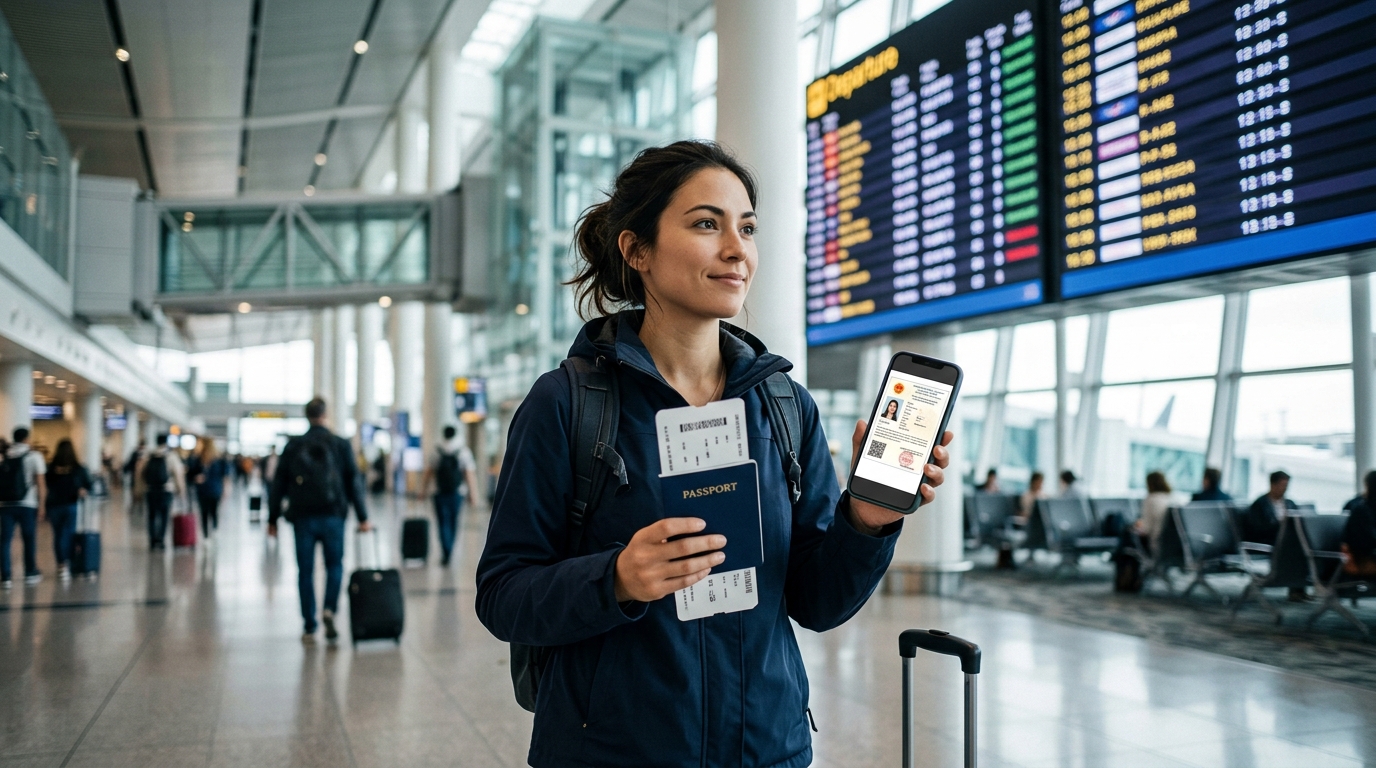
An urgent Vietnam visa is a fast-tracked electronic visa (e-visa) processed by a licensed agency in as little as 1 to 8 working hours instead of the standard 3 working days. If you fly within a day or two, this is almost always the route you want: you apply online, an agency prioritises your file with Vietnam Immigration, and you receive an approved e-visa PDF by email that you print and present at the airport. No embassy visit, no queue for a paper letter.
This guide is the hub for everything time-sensitive about entering Vietnam in 2026. Below you will find the realistic turnaround windows, who qualifies for emergency processing, what it costs, and when the old visa on arrival still applies, with links to deeper walkthroughs for every scenario.
Urgent Vietnam visa options at a glance
There are three genuinely fast paths in 2026. Which one fits depends on how many hours you have and whether you have already started an application.
- Super-urgent e-visa (new application): You have not applied yet and need approval today. An agency submits and prioritises a fresh e-visa on your behalf.
- Expedite a pending e-visa: You already applied on the government portal, it is stuck “processing,” and your flight is close. An agency can escalate the existing file.
- Visa on arrival (VOA) with a pre-approval letter: A narrower option in 2026, now mainly for specific cases rather than ordinary tourists (details below).
For a full breakdown of every acceleration method and how to choose between them, see our companion guide on how to expedite a Vietnam visa.
Turnaround windows: what “1-hour” and “2-hour” really mean
Agencies advertise tiers such as 1 hour, 2 hours, 4 hours, same day, and 1 working day. These are real, but two caveats matter:
- Windows are counted in Vietnam Immigration working hours, not wall-clock time. A “2-hour” tier submitted at 4:30 pm local time may finish the next morning. Vietnam is UTC+7, so check the time in Hanoi before you assume a deadline is achievable.
- The fastest 1-2 hour promises are frequently VOA approval-letter products, not a stamped e-visa. Confirm exactly which document you are buying, because it changes what you do at the airport.
The official portal at evisa.gov.vn has no expedite button and is effectively unresponsive on weekends and Vietnamese public holidays. Speed comes from an agency prioritising your file inside the immigration system during working hours, not from a faster government tier.
Realistic turnaround and cost comparison
The table below shows typical tiers in 2026. Treat the figures as ranges to sanity-check quotes, not fixed prices, and always verify the exact fee and cut-off time with your provider before you pay.
| Route / tier | Typical turnaround | Indicative all-in cost* | Best for |
|---|---|---|---|
| Government e-visa (standard) | ~3 working days (often 3-5 in peak season) | ~US$25 single / ~US$50 multiple | Trips booked well ahead |
| Urgent e-visa | ~1 working day | Government fee + agency premium | Flying in 2-4 days |
| Super-urgent e-visa | ~4-8 working hours | Higher agency premium | Flying tomorrow |
| Emergency e-visa | ~1-2 working hours | Top-tier premium | Same-day departure |
| VOA + pre-approval letter | ~1-8 hours for the letter (eligible cases only) | Service fee + US$25 stamping fee at airport | Specific/urgent cases (see below) |
*Costs vary widely by provider, nationality, entry type and how many hours you compress the timeline into. For a transparent breakdown of what actually goes into the fastest tiers, read the real all-in cost of a 1-hour and 2-hour Vietnam visa.
Super-urgent e-visa: a fresh application, fast
This is the most common urgent scenario: you have not applied yet and departure is close. The e-visa itself is unchanged: single or multiple entry, up to 90 days, and since the December 2025 port expansion it is valid at 83 international ports, made up of 17 airports, 27 land crossings and 39 seaports. Newer e-visas no longer even print a fixed port of entry, so you can enter through any eligible gate if your plans shift.
What “urgent” changes is only the speed of processing, driven by the agency, not the visa’s contents. To apply fast you will typically need:
- A clear scan or photo of your passport bio page, valid at least 6 months with two blank pages;
- A passport-style portrait photo (no glasses, plain background);
- Your intended entry date and port;
- A working email for the approved PDF.
Get the document rules right the first time: a blurry scan or a photo with a hat is a leading cause of delay. See our checklist on urgent Vietnam e-visa requirements in 2026 before you submit.
Already applied? Expedite a pending e-visa
If you submitted on evisa.gov.vn and it has sat in “processing” past the normal window while your flight looms, you do not have to start over. A licensed agency can escalate your existing application code, with no duplicate visa and no double government fee. This is a distinct service from a new super-urgent file.
Timing still runs on immigration working hours, so a Friday-evening or holiday submission is the classic trap. Our step-by-step guide covers what to send, what is realistic, and what to avoid: how to expedite a pending Vietnam e-visa you already submitted.
If your e-visa was rejected and you fly soon
A rejection is not always the end of the trip. Common causes such as a name mismatch, a poor photo or an unclear passport scan are fixable, and a clean, correctly prepared reapplication can still land in time. Move quickly and methodically using our guide to reapplying fast after a Vietnam e-visa rejection.
When visa on arrival (VOA) still applies in 2026
VOA has narrowed sharply. In 2026 it is not a general option for independent tourists. It requires a pre-approval letter arranged before you fly and is now oriented toward specific situations, for example travellers with an extremely short lead time who cannot wait for e-visa processing, or those entering under sponsorship or invitation from a Vietnamese organisation.
Practical points if VOA is genuinely your case:
- You still need the pre-approval letter before boarding; you cannot simply turn up.
- You pay a stamping fee, commonly US$25 for single entry, in cash at the airport counter, on top of the agency’s service fee.
- It only works at international airports, not land borders.
For most people flying to Vietnam, a super-urgent e-visa is faster, cheaper and simpler than VOA. To see the two compared head-to-head on speed, read e-visa or visa on arrival: which is faster in 2026.
Who qualifies for emergency processing?
Emergency e-visa processing is not restricted to certain nationalities: the e-visa is open to travellers from all countries and territories. In practice, “qualifying” is really about your timeline and paperwork:
- You have a real deadline: departure within roughly 24-72 hours, a pending file about to miss a flight, or a rejection to fix at speed.
- Your documents are clean: a valid passport (6+ months), a compliant photo, and consistent details. Messy inputs cancel out any speed you pay for.
- You are inside working hours (or willing to accept the risk if not): the closer you sit to a weekend or Vietnamese holiday, the more conservative your tier choice should be.
US travellers have a few nationality-specific quirks worth knowing before they rush, including passport validity, common name-order errors, and entry-point details. We cover them in urgent Vietnam visa for US citizens in 2026.
Do not forget the digital arrival card
A visa is no longer the only pre-arrival step. Since 15 April 2026, most travellers arriving at Ho Chi Minh City’s Tan Son Nhat Airport (SGN) must complete a free digital arrival card online before immigration, a short declaration that generates a QR code you show on arrival. You can submit it up to 72 hours before departure. The requirement has already extended to further airports, including Phu Quoc (PQC) and Hanoi’s Noi Bai (HAN), is still being rolled out through 2026, and applies even to visa-exempt visitors.
It takes only a few minutes, but leaving it until you land can mean queueing to fix it at a bad moment. If you are cutting your visa timeline fine, add the arrival card to your checklist and complete it once your flight is confirmed. Verify the current port scope for your specific airport before you travel.
How to start an urgent Vietnam visa application
When the clock is running, a calm, ordered process beats panic. In short:
- Check the time in Hanoi (UTC+7) and how many immigration working hours remain before you fly.
- Pick your route: new super-urgent e-visa, expedite a pending one, or, only if it truly fits, VOA.
- Prepare clean documents: sharp passport scan, compliant photo, correct entry date and port.
- Choose a tier with a safety margin rather than the absolute fastest, especially near weekends and holidays.
- Complete the digital arrival card once your visa is approved and your flight is set.
If you are short on time and want the file handled correctly the first time, you can start an urgent application with Vietnam Visa Urgent and have a specialist prioritise your case. Confirm the exact fee and realistic turnaround for your departure with the provider before you pay; a good service will give you both up front.
Frequently asked questions
What is the fastest way to get a Vietnam visa?
The fastest route in 2026 is a super-urgent e-visa handled by a licensed agency, which can be approved in as little as 1 to 8 working hours instead of the standard 3 working days. The official evisa.gov.vn portal has no expedite option, so speed comes from an agency prioritising your file within Vietnam Immigration during working hours. In very specific cases a visa on arrival with a pre-approval letter can also be fast, but it is no longer a general option for tourists.
Can I really get a Vietnam visa in 1 hour?
One-hour and two-hour tiers exist, but they are counted in Vietnam Immigration working hours, not wall-clock time, so a late-afternoon or weekend submission may not finish that fast. The quickest 1-2 hour promises are often visa-on-arrival approval letters rather than a stamped e-visa, so confirm exactly which document you are buying. Always verify the achievable cut-off time with the provider based on the current hour in Hanoi (UTC+7).
How much does an urgent Vietnam visa cost?
You pay the government e-visa fee (around US$25 for single entry or US$50 for multiple entry) plus an agency premium that rises the more you compress the timeline. A 1-working-day tier costs less than a same-day or 1-2 hour emergency tier. Exact prices vary by provider, nationality and entry type, so ask for an all-in quote before paying and never assume an advertised headline price is final.
Can I still get a Vietnam visa on arrival in 2026?
Visa on arrival still exists but has been narrowed and is no longer a standard option for independent tourists. It requires a pre-approval letter arranged before you fly, only works at international airports, and is mainly aimed at specific or urgent cases such as very short lead times or sponsored/invited travel. For most travellers a super-urgent e-visa is faster, cheaper and simpler.
Can I expedite a Vietnam e-visa I already submitted?
Yes. If your application is stuck in processing on the government portal and your flight is close, a licensed agency can escalate your existing application code without you starting over or paying a second government fee. Processing still runs during immigration working hours only, so a Friday-evening or holiday submission is the most common cause of delay.
Do I need a digital arrival card as well as an urgent visa?
Most likely, yes. Since 15 April 2026, travellers arriving at Ho Chi Minh City’s Tan Son Nhat Airport (SGN) must complete a free online digital arrival card before immigration, and the requirement is expanding to more airports such as Phu Quoc and Hanoi’s Noi Bai. It is separate from your visa, can be submitted up to 72 hours before arrival, and takes only a few minutes, but skipping it can cause delays on arrival. Check the current scope for your specific airport before you travel.